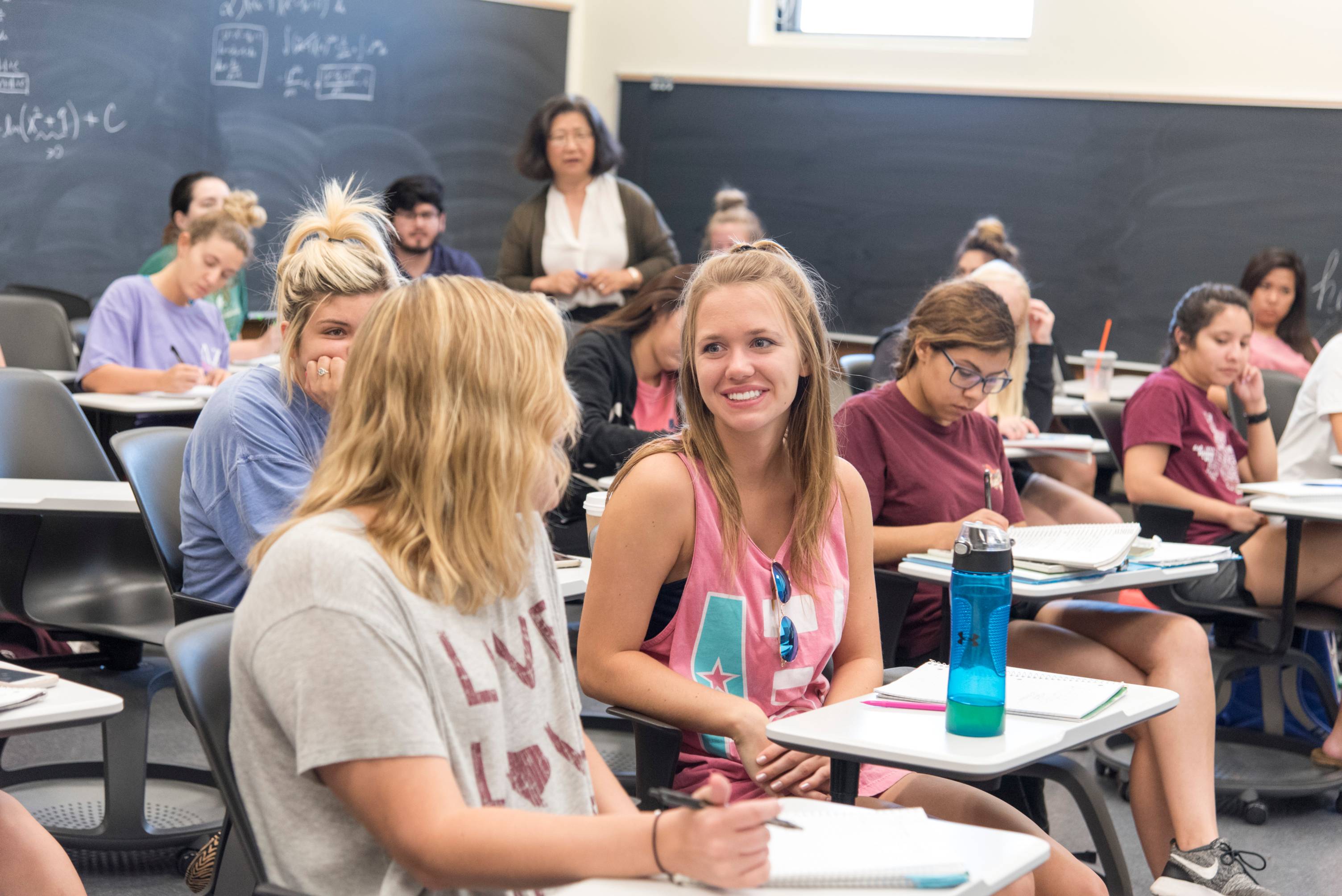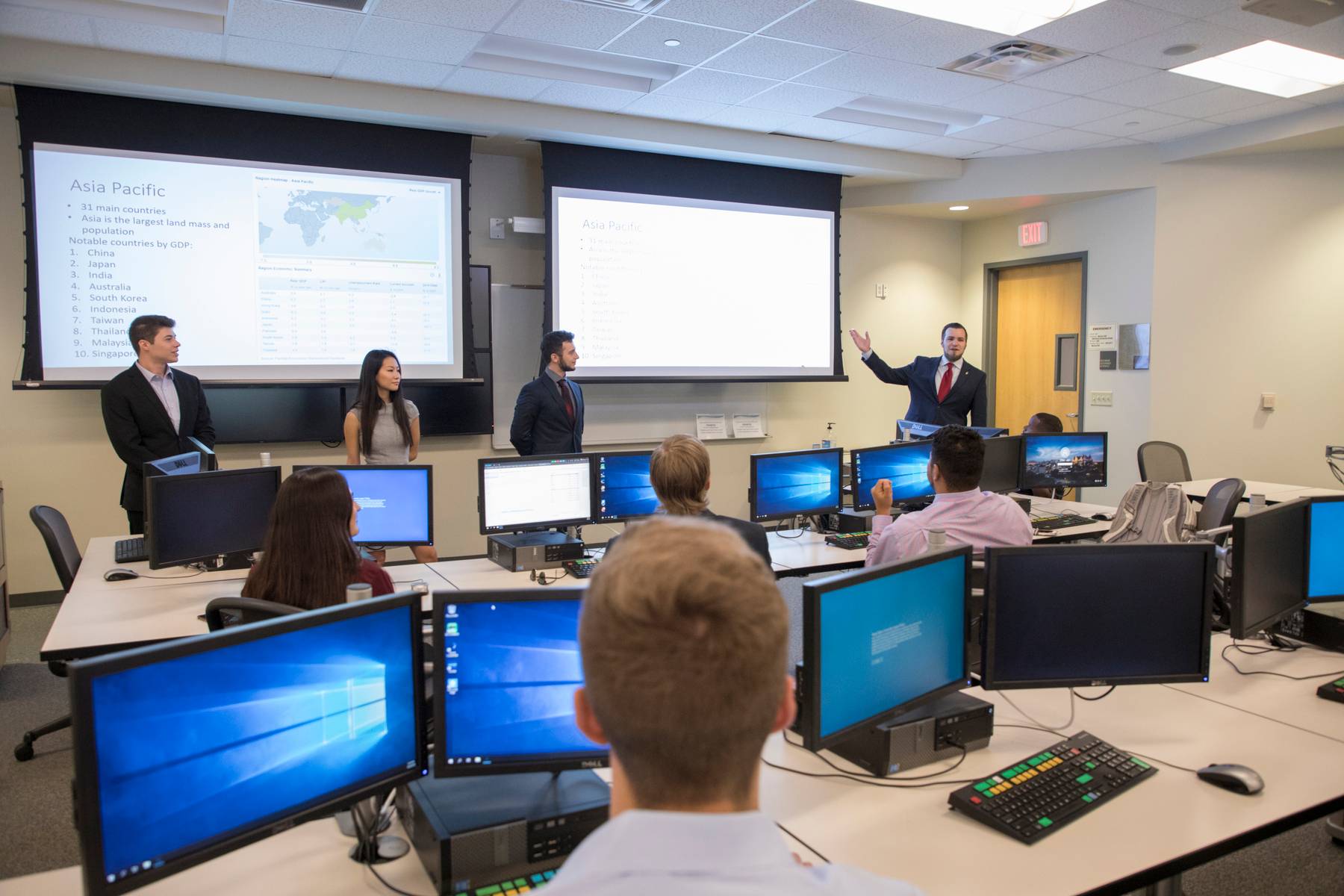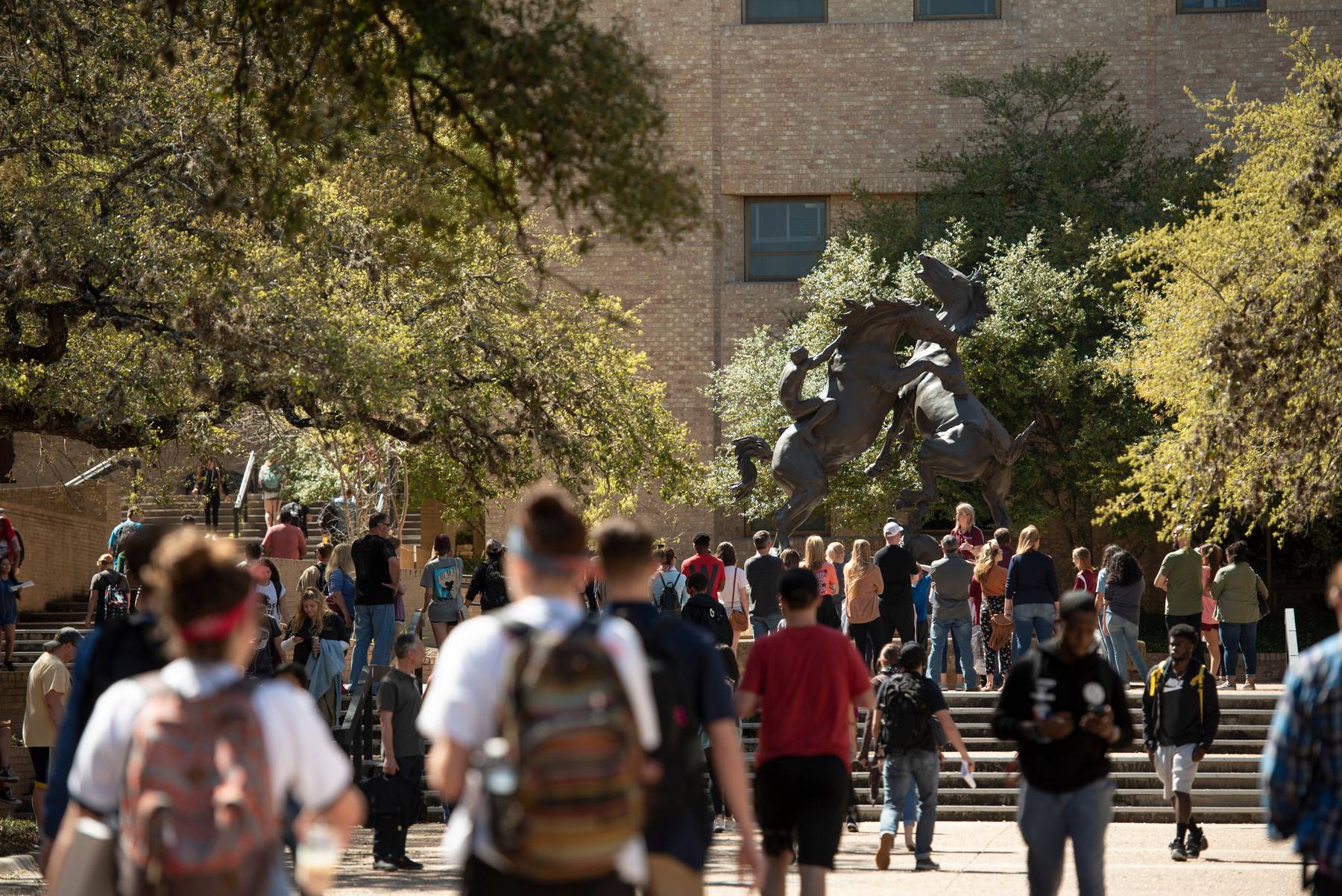
Getting involved early can make a real difference in your success at Texas State. Study skills workshops and tutoring help you build strong academic habits and confidence, while student organizations give you the chance to connect with others, develop leadership skills, and feel at home on campus. Start early and set yourself up to thrive as a Bobcat.
There is a lot to love about math.
Student Focused
We have a wide offering of general education courses designed to prepare you to major in Business and STEM (Science, Technology, Engineering, and Mathematics) fields.
In Active Grants
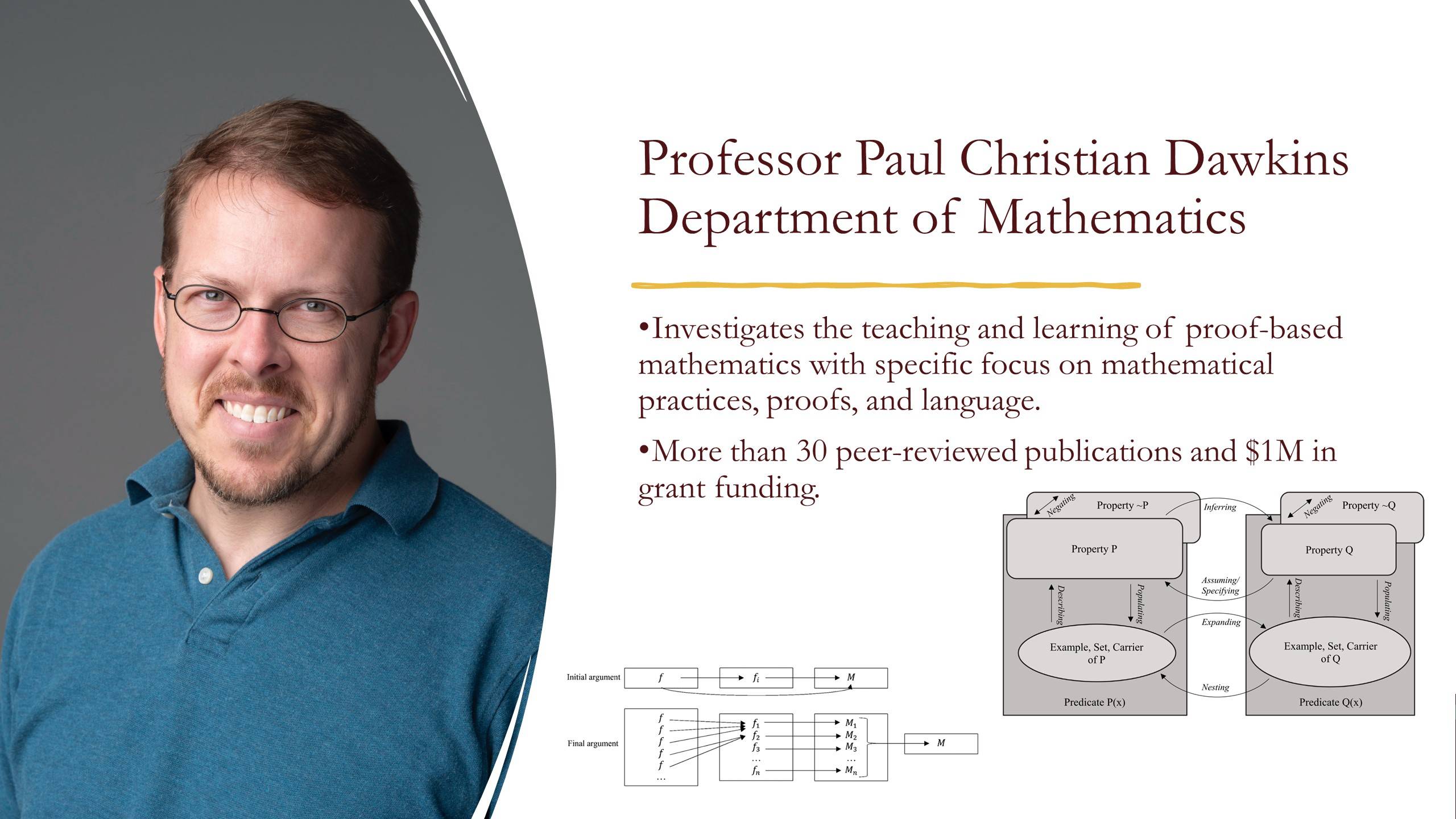
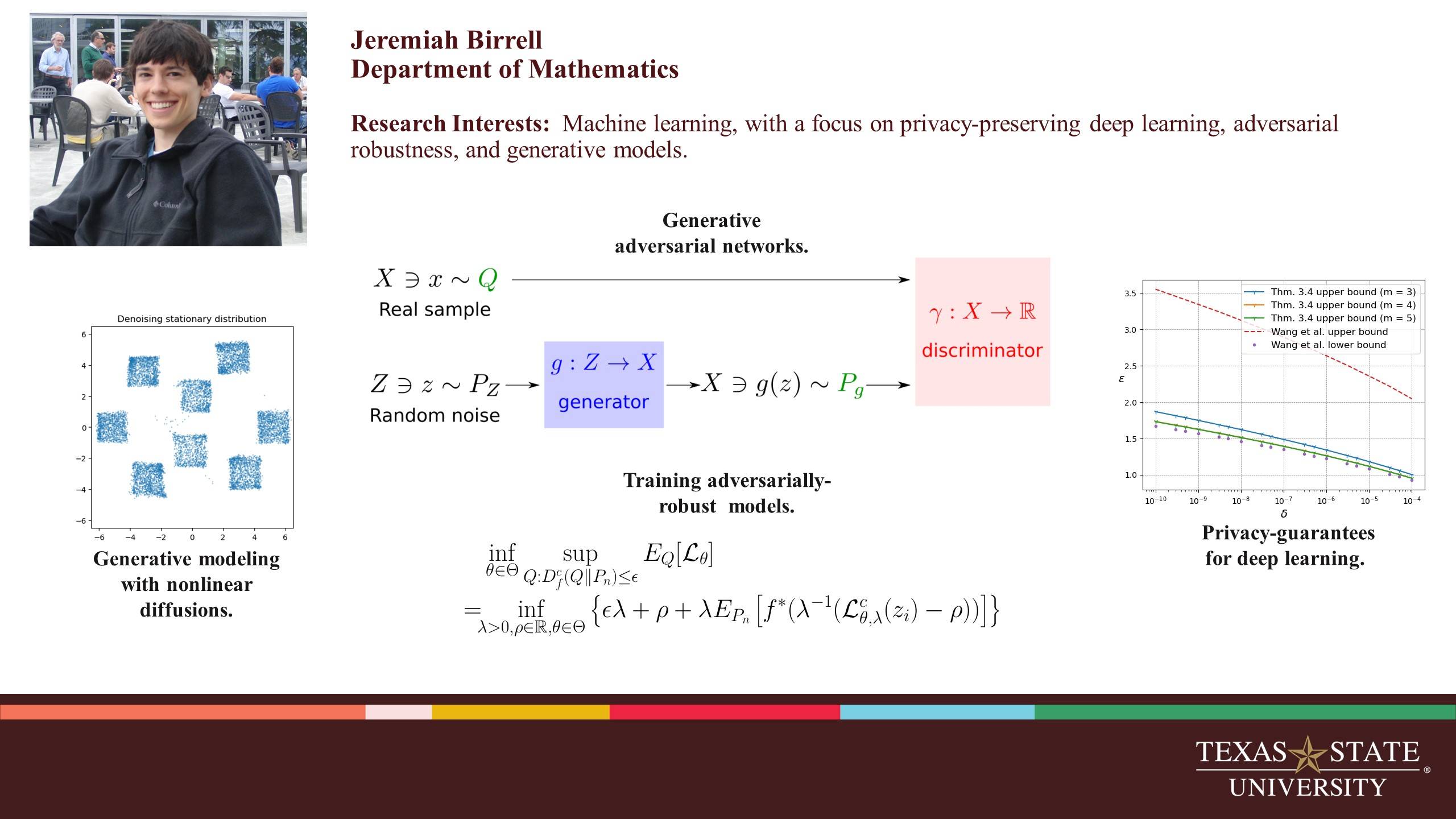
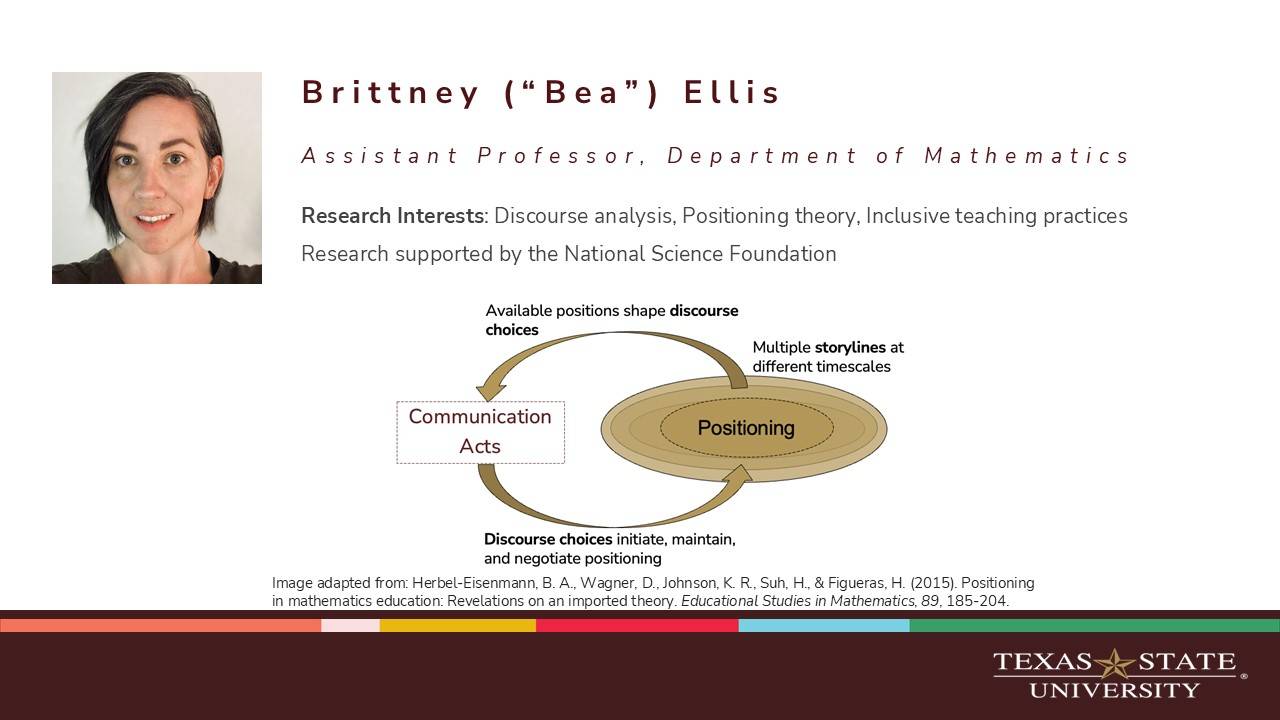
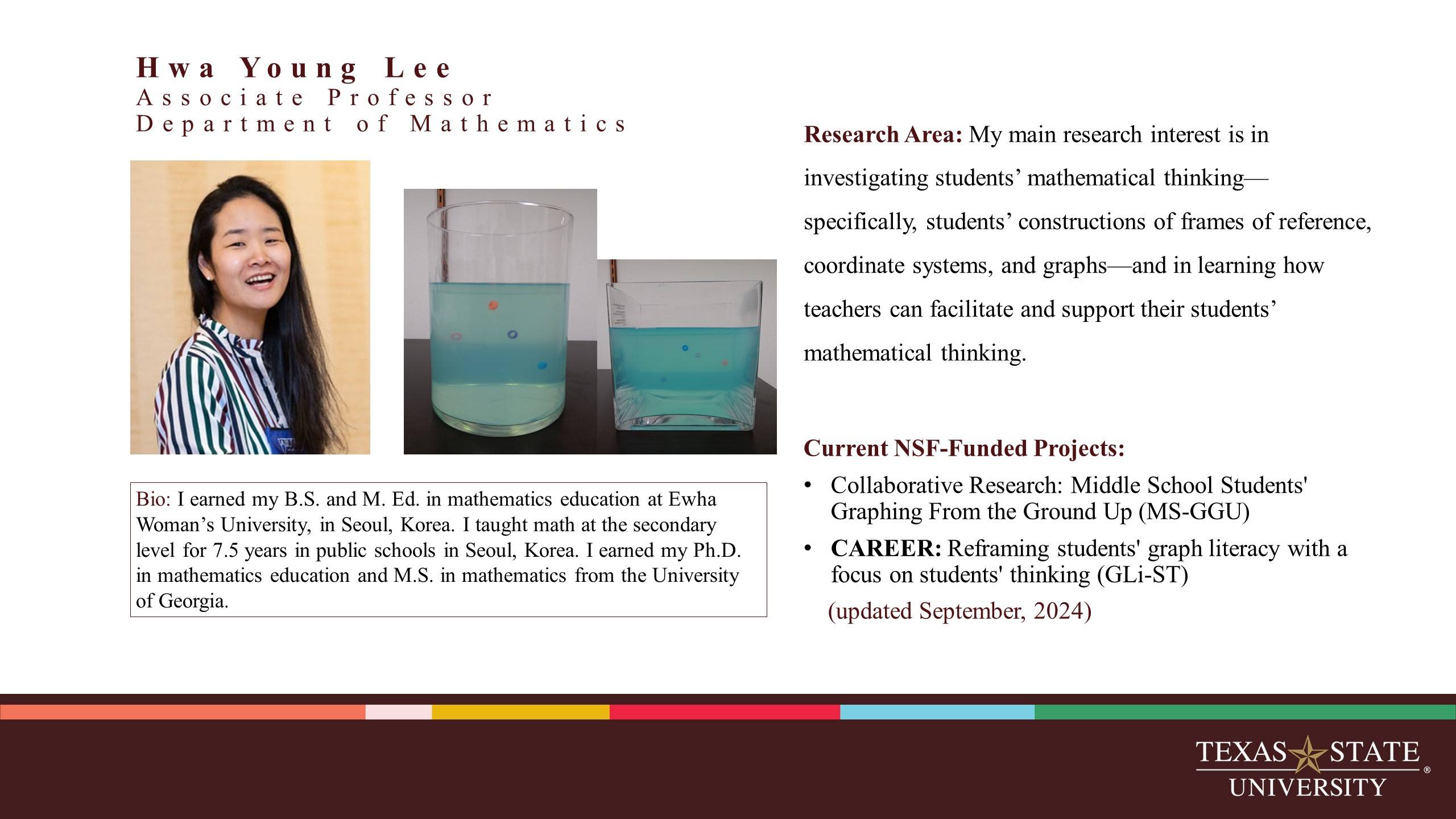
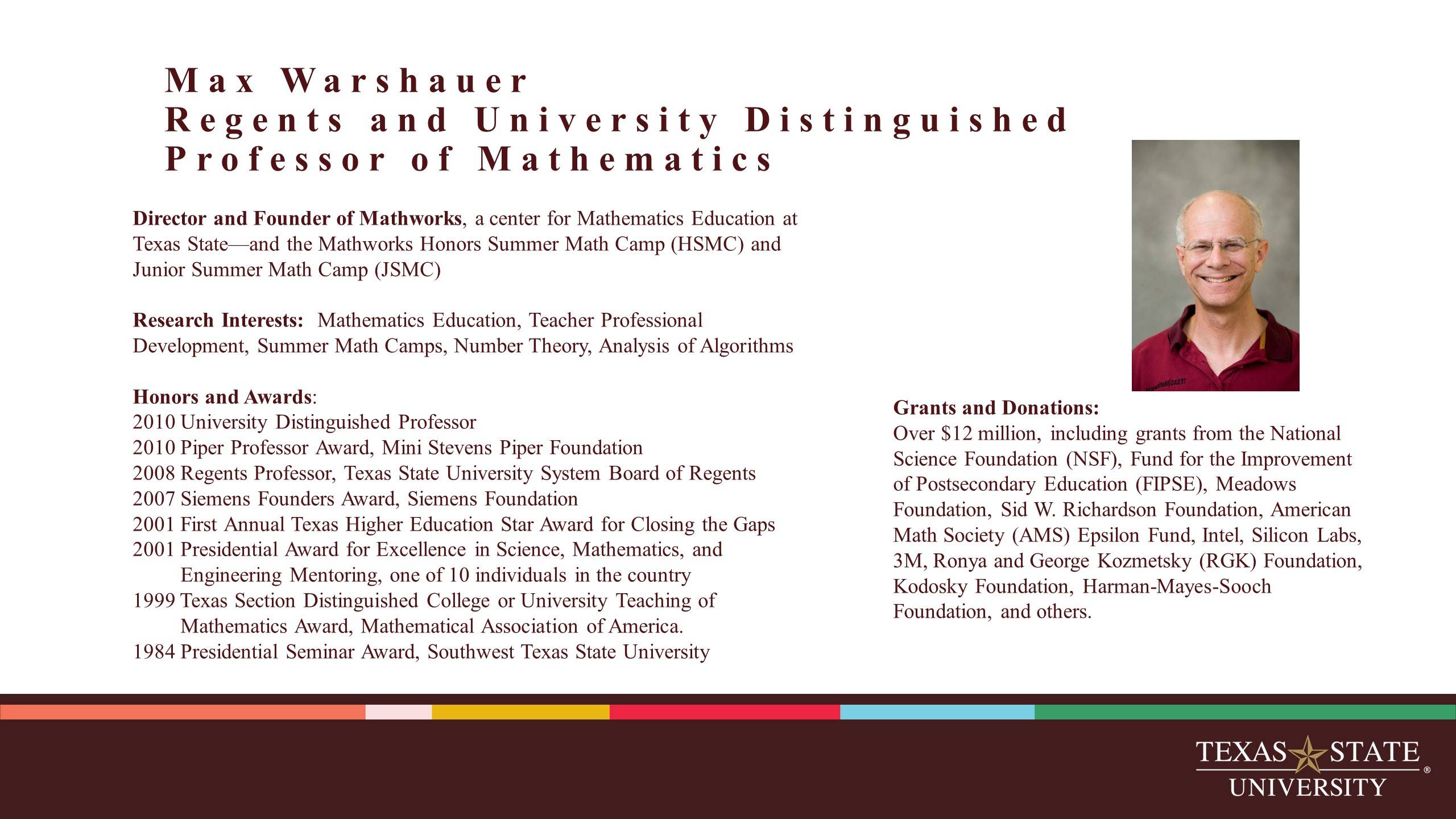
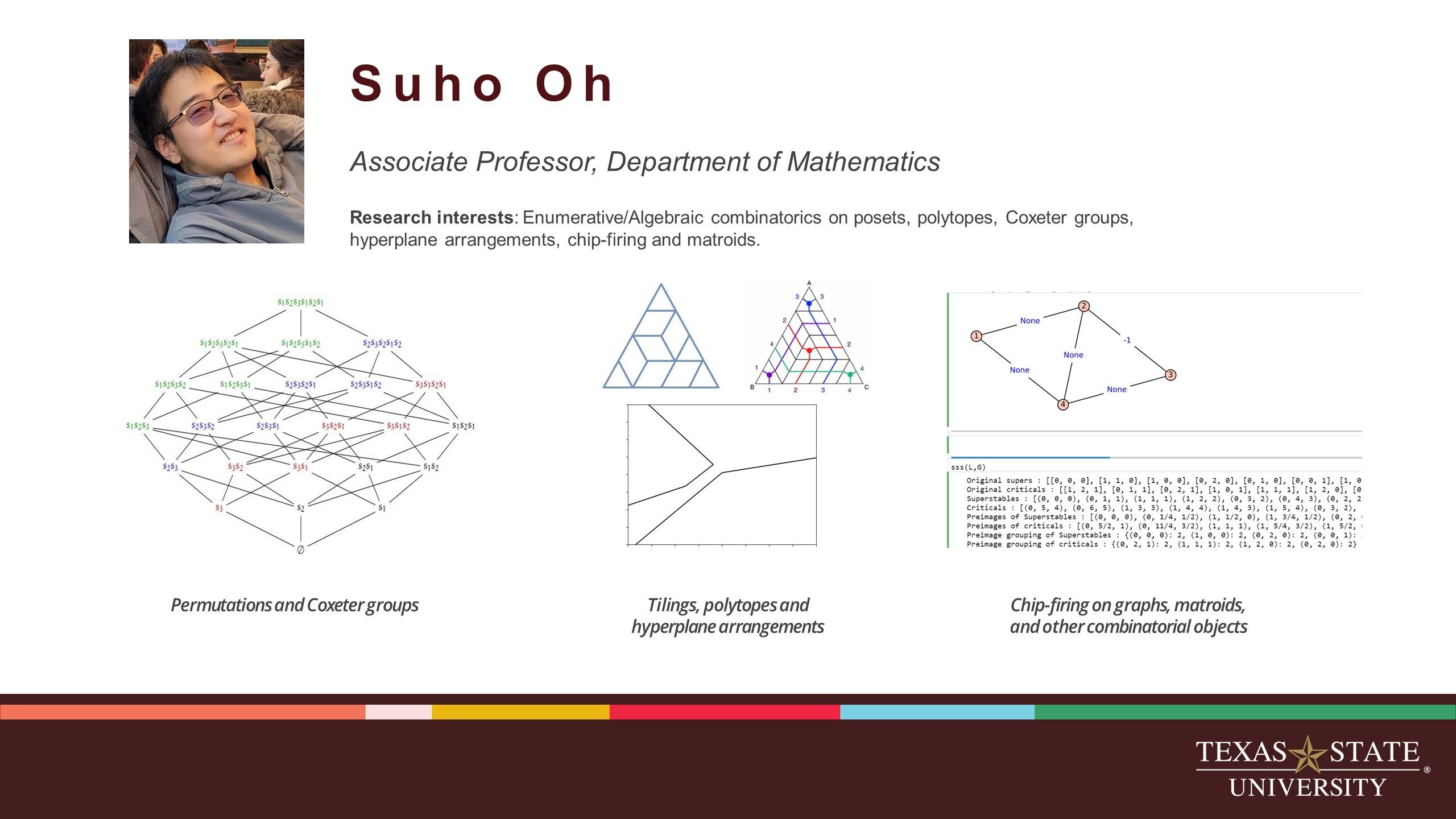
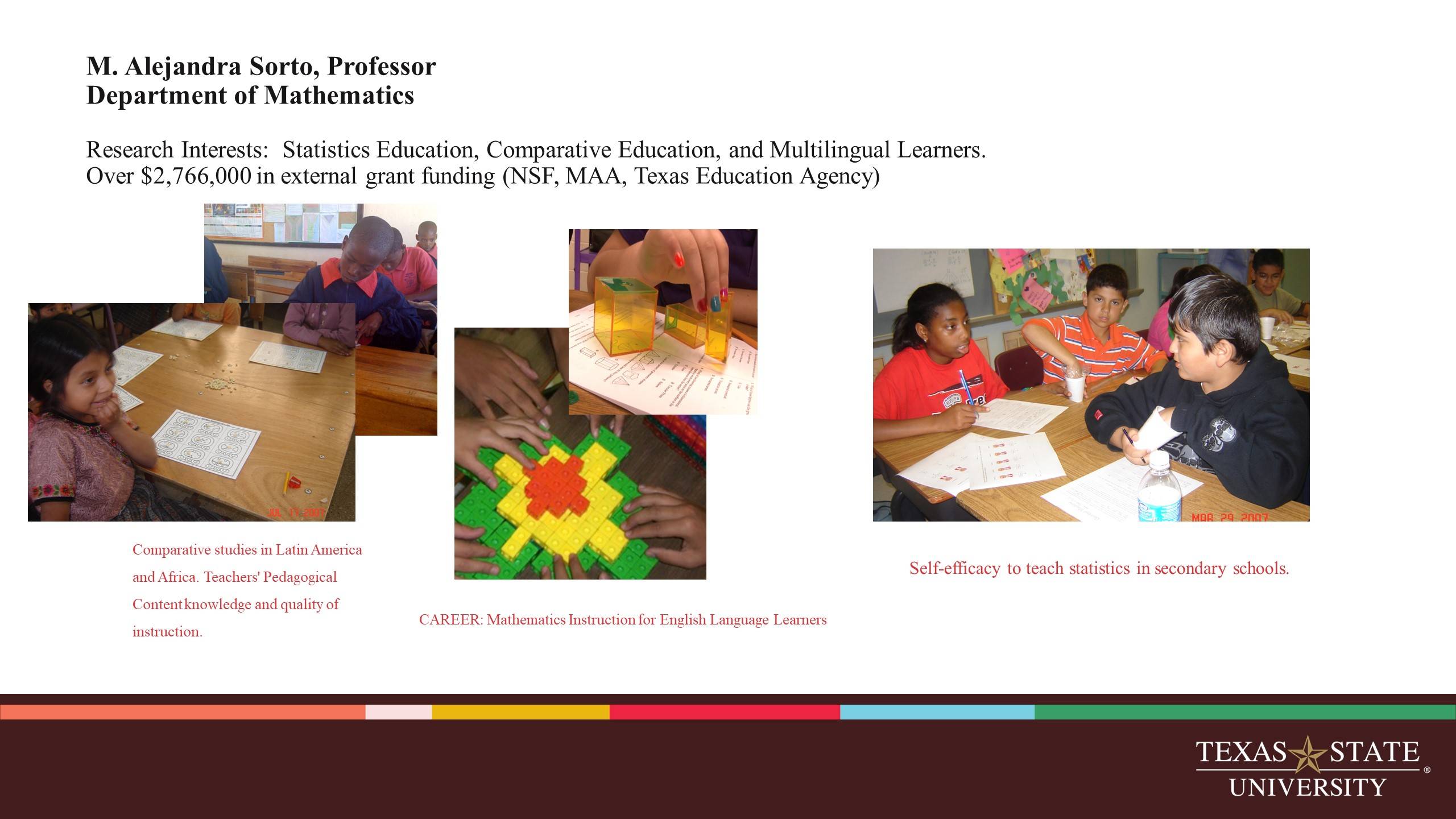
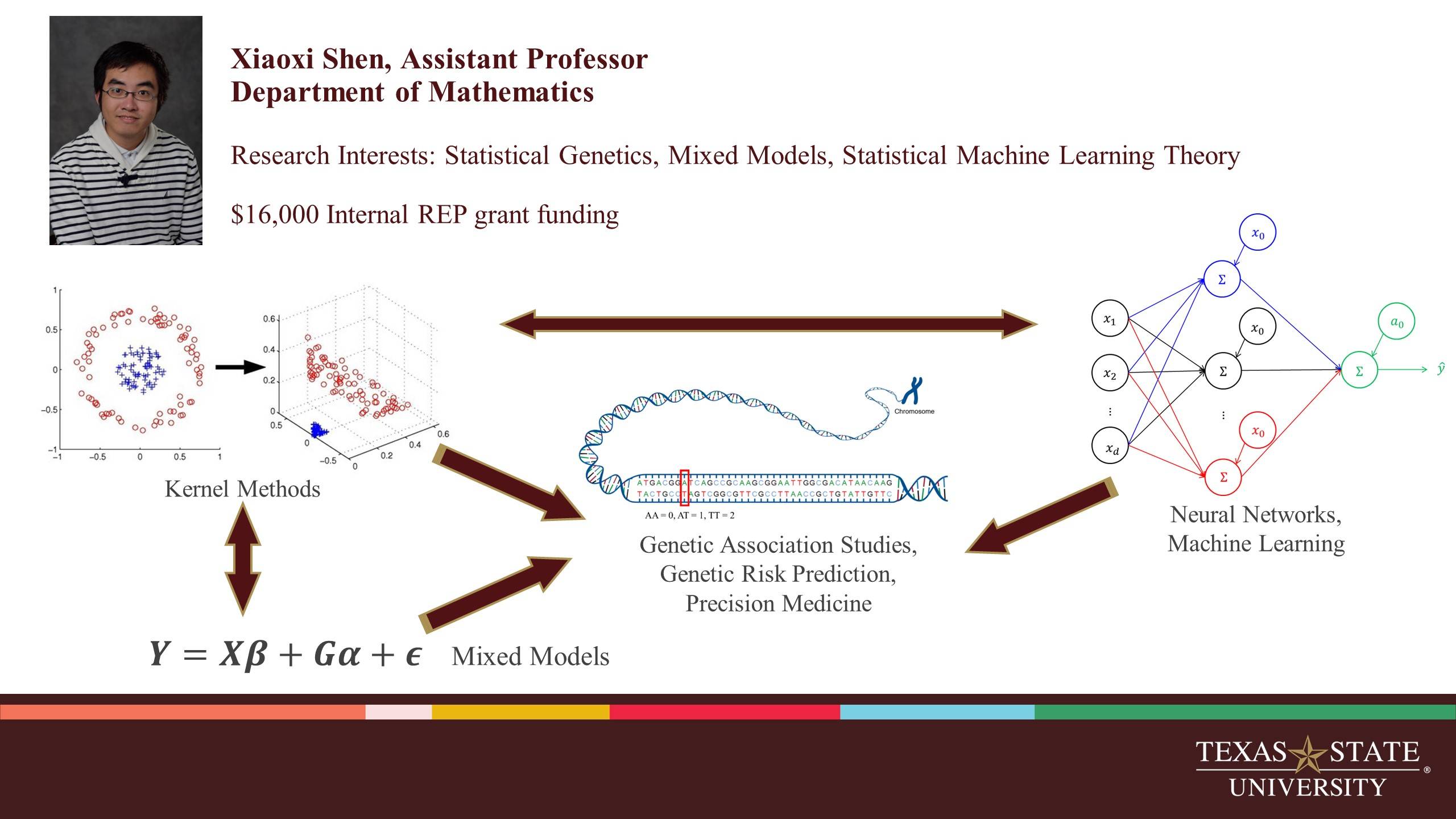
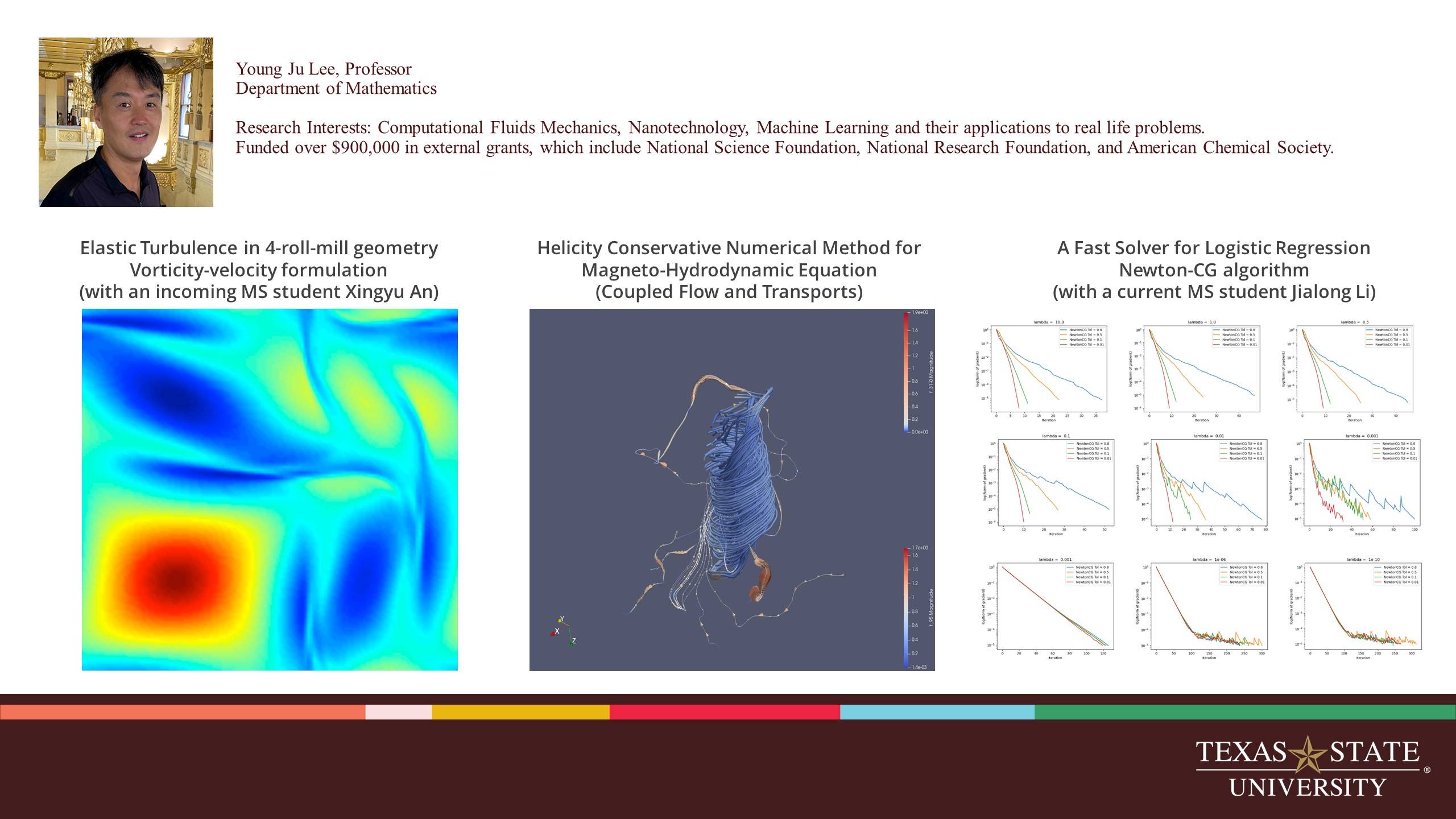
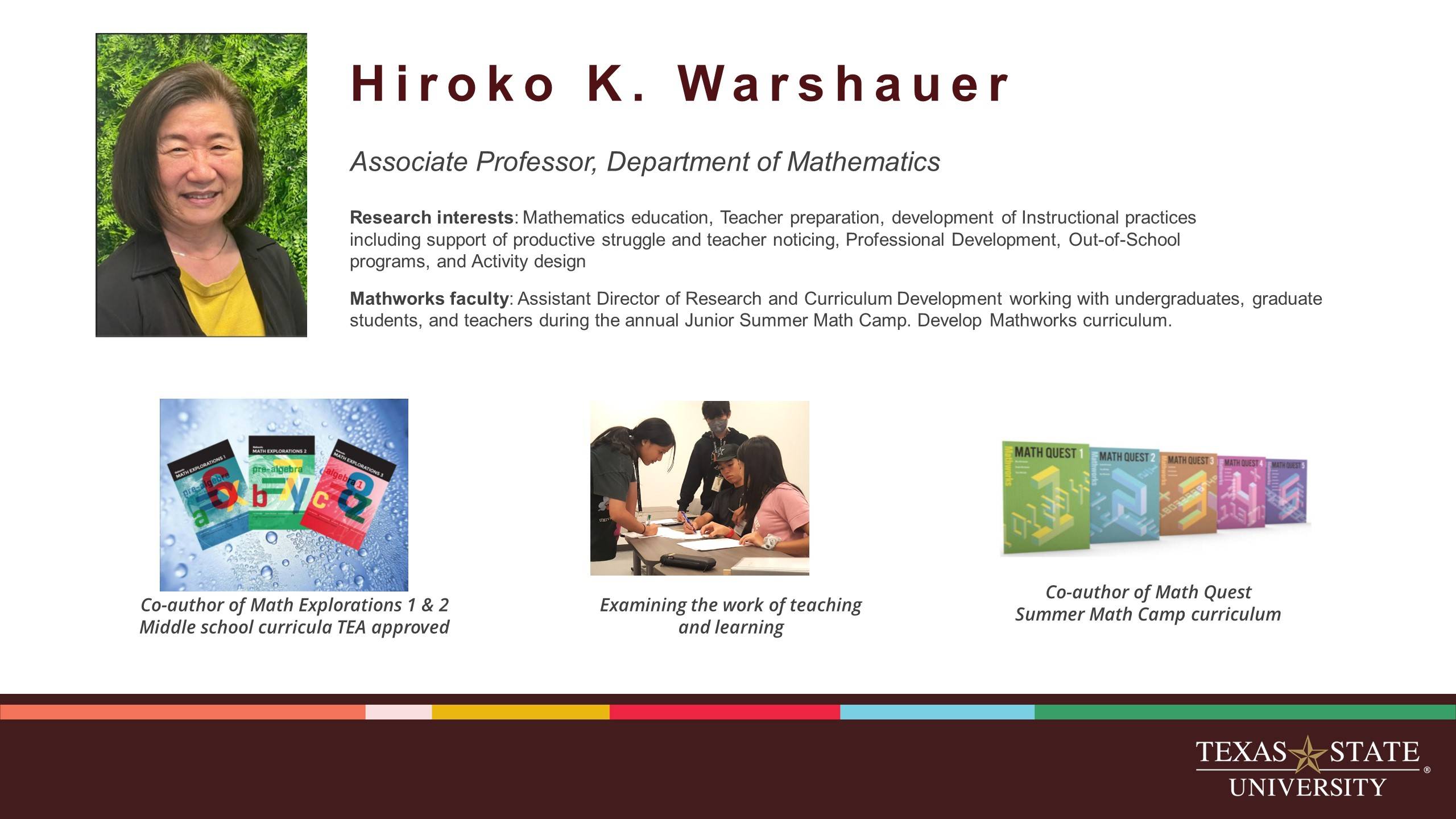
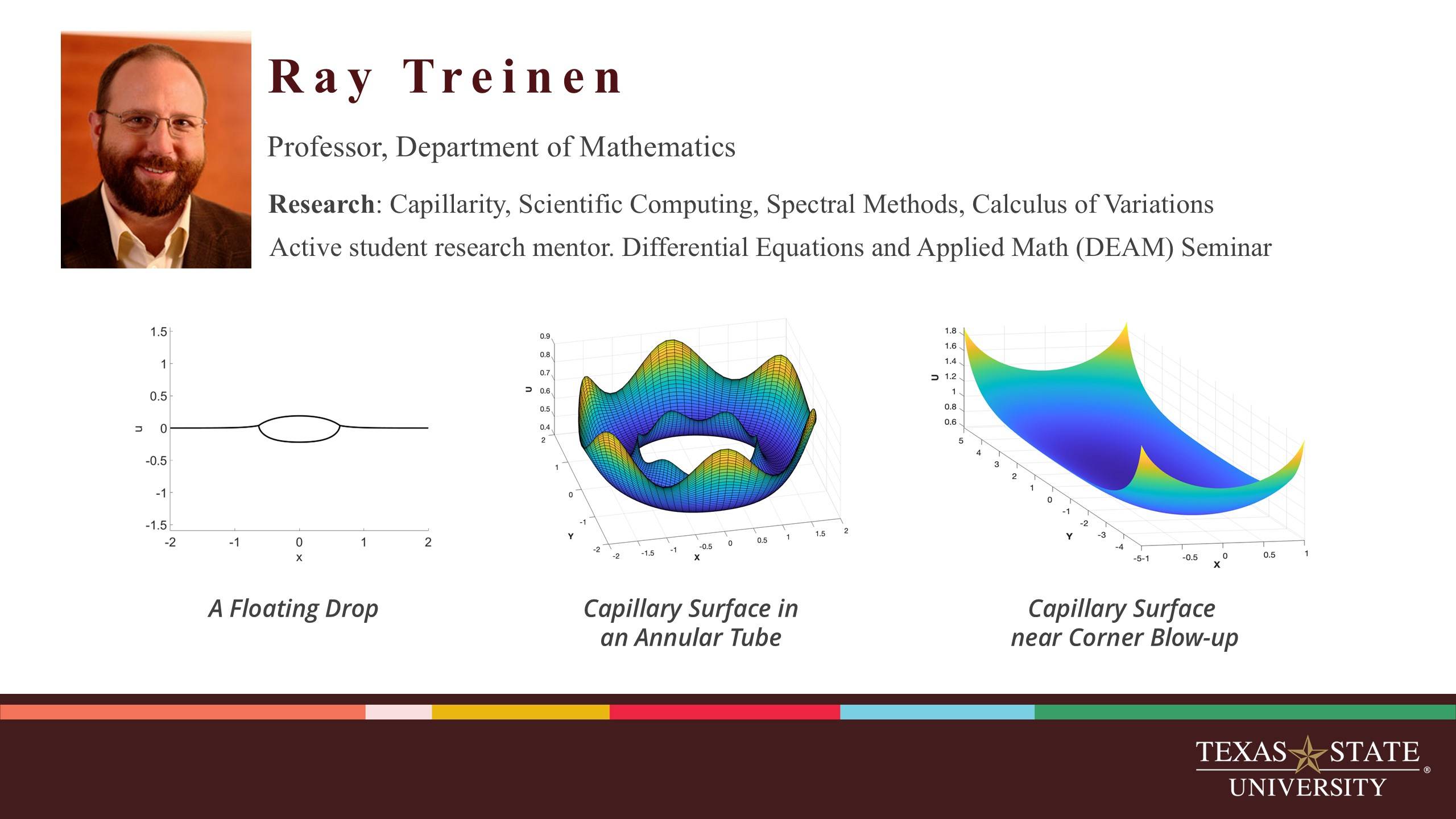
Discover our dynamic faculty and the innovative research they’re driving through, high-impact grant awards.
NEXT in Math
Promotion from Assistant Professor to Associate Professor & Tenure
Hiroaki Tanaka
Promotion from Associate Professor to Professor
Kathleen Melhuish and Hiroko Warshauer
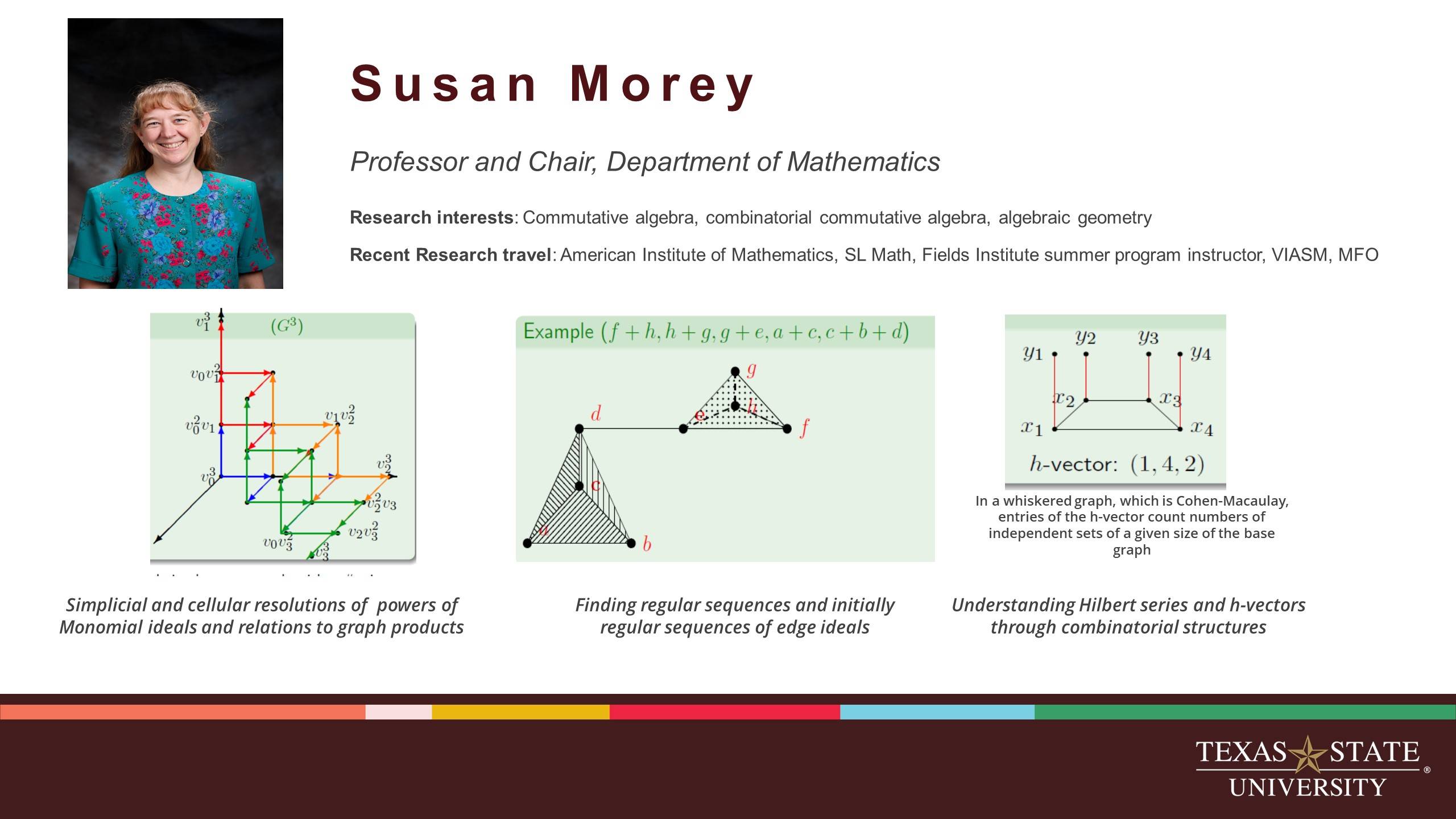
Dr. Susan Morey Receives the University Distinguished Professor Award
This award honors individuals whose performance in teaching, research, and service has been exemplary and recognized at the state, national, and international levels.
@TXST Math
- Location:
- DERR 339; 339
- Cost:
- Free
- Contact:
- Will Boney
wb1011@txstate.edu - Campus Sponsor:
- National Science Foundation: Grant Nos. DMS-2137465 and DMS-2339018
Alejandro Poveda - University of Barcelona
Title: "On the optimality of the HOD Conjecture"
Abstract: Woodin’s striking HOD dichotomy states that, under the presence of certain large cardinals (i.e., an extendible), either the class of Hereditarily Ordinal Definable sets (i.e., HOD) is close to the mathematical universe or it is far apart from it. Woodin’s HOD Conjecture postulates that under the existence of an extendible cardinal the second of the above alternatives cannot occur.
In this presentation I will report on various recent results on the optimality of the HOD dichotomy. For instance, we will show that even if the HOD Conjecture is true, the first extendible cardinal may not be extendible in HOD.
Also, we show that the HOD hypothesis is consistent with the first supercompact cardinal carrying a club of HOD-regular cardinals whose successors are incorrectly computed by HOD. As a bi-product of our analysis, we solve
questions by Cheng–Friedman–Hamkins and Cummings—Friedman–Golshani, among others.
Title: "On the optimality of the HOD Conjecture"
Abstract: Woodin’s striking HOD dichotomy states that, under the presence of certain large cardinals (i.e., an extendible), either the class of Hereditarily Ordinal Definable sets (i.e., HOD) is close to the mathematical universe or it is far apart from it. Woodin’s HOD Conjecture postulates that under the existence of an extendible cardinal the second of the above alternatives cannot occur.
In this presentation I will report on various recent results on the optimality of the HOD dichotomy. For instance, we will show that even if the HOD Conjecture is true, the first extendible cardinal may not be extendible in HOD.
Also, we show that the HOD hypothesis is consistent with the first supercompact cardinal carrying a club of HOD-regular cardinals whose successors are incorrectly computed by HOD. As a bi-product of our analysis, we solve
questions by Cheng–Friedman–Hamkins and Cummings—Friedman–Golshani, among others.
SIAM
–
- Location:
- INGR 3102; 3102
- Cost:
- Free
- Contact:
- Dr. Piyush Shroff (pshroff@txstate.edu)
- Campus Sponsor:
- Society for Industrial and Applied Mathematics
Society for Industrial and Applied Mathematics (SIAM) fosters the development of applied mathematical and computational methodologies needed in various application areas. Applied mathematics, in partnership with computational science, is essential in solving many real-world problems. Through publications, research and community, the mission of SIAM is to build cooperation between mathematics and the worlds of science and technology.
Click here for more information
more about event
- Location:
- DERR 330; 330
- Cost:
- Free
- Contact:
- Jackson Rebrovich (jdr134@txstate.edu)
The Math Club is a student-led organization for anyone who enjoys problem-solving, logical thinking, and exploring math beyond the classroom. Whether you love tackling challenging puzzles, preparing for competitions, or just want to sharpen your skills with friends, our club offers a fun and supportive environment to learn, collaborate, and grow. No matter your experience level, curiosity is all you need—come think, solve, and discover with us!
Our theme for the semester will be:
"Learn Math with AI'' Click here for more information
more about event
Our theme for the semester will be:
"Learn Math with AI'' Click here for more information
- Location:
- DERR 338; 338
- Cost:
- Free
- Contact:
- Hamilton Hardison
hhardison@txstate.edu - Campus Sponsor:
- Department of Mathematics
Faculty and students learn about and discuss issues related to the teaching and learning of mathematics and new findings in mathematics education research. Graduate students in the Mathematics Education programs are expected to attend whenever possible; students from other programs are always welcome.
Click here for more information
more about event
- Location:
- DERR 121; 121
- Cost:
- Free
- Contact:
- Cameron Farnsworth
cfarnsworth@txstate.edu - Campus Sponsor:
- Department of Mathematics
Love a good problem? Like to solve difficult puzzles?
Join professors, graduate students and undergraduates as we tackle problems presented from several mathematical journals. An interest in higher level mathematics is all that is required to join our round table. Offer what you know, learn what you don't in a relaxed environment with some of our department's finest! Click here for more information
more about event
Join professors, graduate students and undergraduates as we tackle problems presented from several mathematical journals. An interest in higher level mathematics is all that is required to join our round table. Offer what you know, learn what you don't in a relaxed environment with some of our department's finest! Click here for more information
- Location:
- DERR 333; 333
- Cost:
- Free
- Contact:
- Vera Ioudina
vi11@txstate.edu - Campus Sponsor:
- Department of Mathematics
Joachim Schwarz
University of Applied Sciences Emden/Leer, Germany
Statistical Data Analysis using Large Language Models
Abstract: Generative AI applications such as ChatGPT can also be used for statistical data analysis. The areas of application range from answering questions about the procedure or selection of suitable analysis methods to the generation of evaluation code in R and complete data analysis by the large language model. In particular, the possibility of having complete data sets evaluated by large language models raises a number of questions: Is the right method being selected? Are application requirements being checked? Is the analysis being performed correctly? Are the interpretations of the results conclusive and plausible? And last but not least: What impact does this have on the statistics education of students in economics study programs? In my presentation, I would like to use sample data sets and ChatGPT to show what is currently possible and what pitfalls there are.
Bio: Dr. Joachim Schwarz has been professor of market research and quantitative methods at the University of Applied Sciences Emden/Leer since 2020. He holds a diploma in mathematics (universities of Göttingen, Germany and Dublin, Ireland) and a PhD in business management (university of Wit-ten/Herdecke, Germany). In 2004, he joined the Deutsche Telekom group and worked as team leader for predictive modeling and churn analysis in the customer relationship management department. His academic career started in 2006 as a lecturer at the Darmstadt University of Applied Sciences. Before moving to Emden, he became a professor at the FOM (private university of applied sciences) in 2013.
Here is the Zoom link for those who cannot attend in person:
https://txstate.zoom.us/j/84190833370?pwd=OzF6cbIZGLqT2fBnUGN8qQwCHSidVf.1
Meeting ID: 84190833370 Passcode: SS_Derr333 Click here for more information
more about event
University of Applied Sciences Emden/Leer, Germany
Statistical Data Analysis using Large Language Models
Abstract: Generative AI applications such as ChatGPT can also be used for statistical data analysis. The areas of application range from answering questions about the procedure or selection of suitable analysis methods to the generation of evaluation code in R and complete data analysis by the large language model. In particular, the possibility of having complete data sets evaluated by large language models raises a number of questions: Is the right method being selected? Are application requirements being checked? Is the analysis being performed correctly? Are the interpretations of the results conclusive and plausible? And last but not least: What impact does this have on the statistics education of students in economics study programs? In my presentation, I would like to use sample data sets and ChatGPT to show what is currently possible and what pitfalls there are.
Bio: Dr. Joachim Schwarz has been professor of market research and quantitative methods at the University of Applied Sciences Emden/Leer since 2020. He holds a diploma in mathematics (universities of Göttingen, Germany and Dublin, Ireland) and a PhD in business management (university of Wit-ten/Herdecke, Germany). In 2004, he joined the Deutsche Telekom group and worked as team leader for predictive modeling and churn analysis in the customer relationship management department. His academic career started in 2006 as a lecturer at the Darmstadt University of Applied Sciences. Before moving to Emden, he became a professor at the FOM (private university of applied sciences) in 2013.
Here is the Zoom link for those who cannot attend in person:
https://txstate.zoom.us/j/84190833370?pwd=OzF6cbIZGLqT2fBnUGN8qQwCHSidVf.1
Meeting ID: 84190833370 Passcode: SS_Derr333 Click here for more information
- Location:
- DERR 329; 329
- Cost:
- Free
- Contact:
- Ellen Couvillion
ebr21@txstate.edu - Campus Sponsor:
- Department of Mathematics
Mathematics major, Matthew Armendariz will give a talk titled First Step into Functions of a Complex Variable from an Undergraduate Student . All students and faculty are welcome to attend!
- Location:
- DERR 329; 329
- Cost:
- Free
- Contact:
- Jeremiah Birrell
jbirrell@txstate.edu - Campus Sponsor:
- Department of Mathematics
The math department hosts a colloquium series in which distinguished researchers present their recent work to a general mathematical audience. All faculty, graduate students and undergraduate students are welcome.
Title: Simulating Cloth in Movies and Games using Discrete Differential Geometry
Speaker: Dr. Etienne Vouga, University of University of Texas at Austin Click here for more information
more about event
Title: Simulating Cloth in Movies and Games using Discrete Differential Geometry
Speaker: Dr. Etienne Vouga, University of University of Texas at Austin Click here for more information
- Location:
- DERR 238; 238
- Cost:
- Free
- Contact:
- Illona Weber ih10@txstate.edu
- Campus Sponsor:
- Department of Mathematics
Math CATS is here to assist in most MATH courses! If you're intimidated by the subject, come in and let's problem solve together. Tutors are here to help reiterate, reinforce and help you relate to the content you heard in lecture. FREE & NO APPOINTMENT NEEDED!
Click here for more information
more about event